What Is iGaming? Meaning, Products and How the Industry Works
Understand what iGaming means, the products it covers, how operators and suppliers work together, and how revenue, regulation and market data fit in.
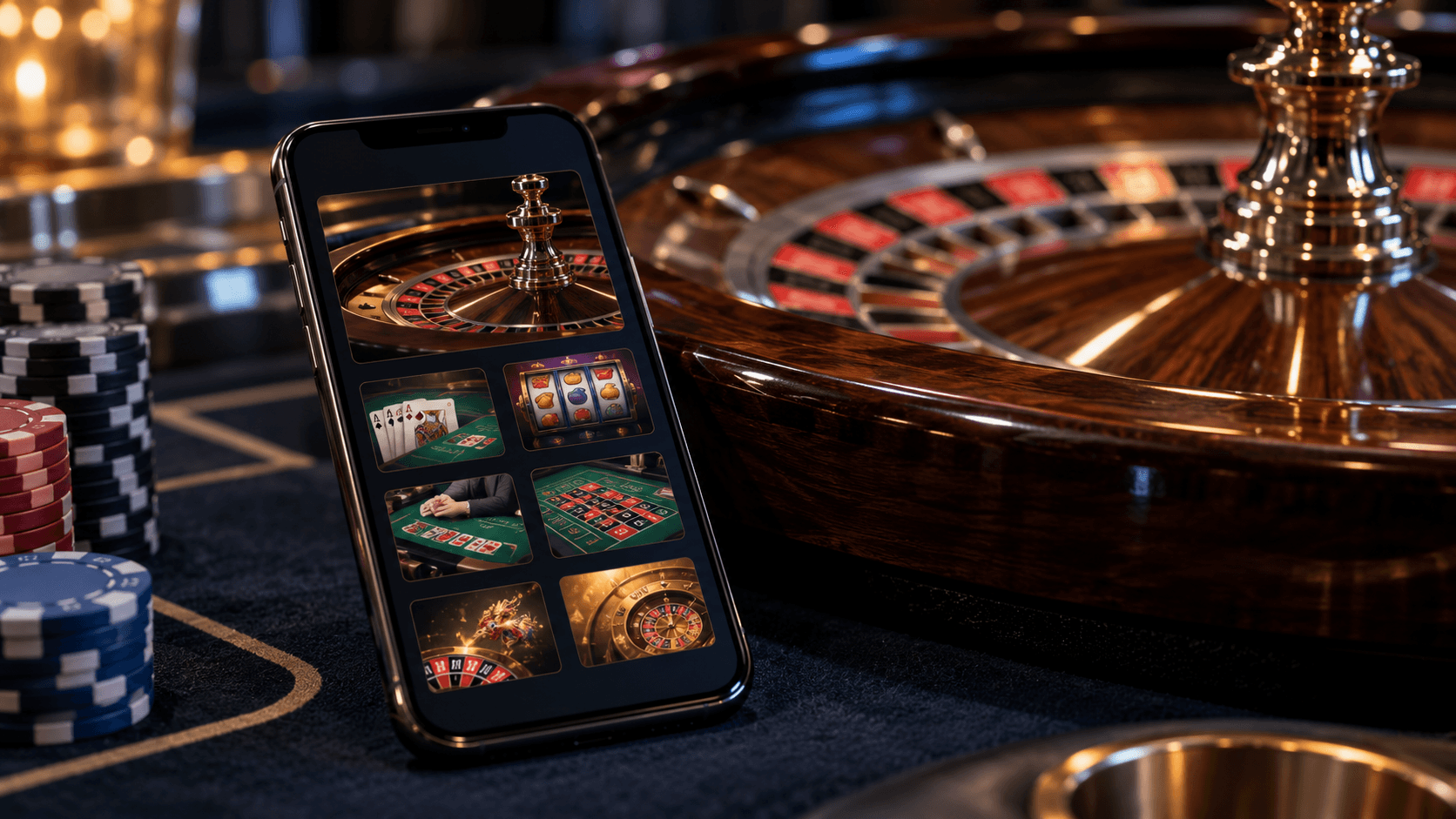
iGaming means gambling delivered through the internet, typically through websites and mobile apps. It includes online casino games, sports betting, poker and bingo, although the term is sometimes used more narrowly for online casino products. The wider iGaming industry also includes the software suppliers, payment businesses, affiliates and compliance services that support operators.
For someone joining the sector, the useful distinction is between the gambling product a customer sees and the business infrastructure behind it. A casino app may look like one service, but it can depend on several organisations with different commercial relationships and regulatory responsibilities.
This guide explains those relationships, the main product categories, how revenue works and what to check when reading claims about market size.
What does iGaming actually mean?
The “i” refers to internet delivery. The term describes a way of providing gambling rather than a single game or a universal legal classification.
An online sportsbook and an online poker room can both sit within the wider iGaming industry, even though their products, pricing and revenue models differ. Conversely, some company reports and US market discussions use “iGaming” specifically for online casino, while treating sports betting as a separate category.
Read the definition attached to a particular dataset before comparing figures. A report describing online casino revenue cannot automatically be treated as a report on all online gambling.
The Gambling Commission’s sector guidance separates activities such as betting, casino and bingo, and includes guidance for remote services. That activity-based approach is more useful for understanding licensing than relying on a broad industry label.
Is iGaming the same as video gaming?
Ordinary video gaming and iGaming overlap in some technology and presentation, but they describe different activities.
A console game, mobile puzzle game or competitive esports tournament is not automatically gambling. Buying a game, paying for a subscription or purchasing an in-game cosmetic item does not, by itself, make that product an online casino.
An esports match can become the subject of a gambling product when a sportsbook accepts bets on its outcome. The competition and the betting service are separate businesses.
Social casino games, prize competitions and products involving virtual items require closer examination. Whether a particular product is legally gambling depends on its mechanics and the relevant jurisdiction. A label such as “social”, “skill-based” or “free-to-play” does not settle that question.
For industry readers, the practical questions are whether customers stake money or something of value, what prizes are available and which legal framework applies.
The main types of iGaming
Online casino
Online casino includes slots and table games such as roulette and blackjack. Some games use software to generate outcomes; live casino products stream real dealers and physical equipment from studios.
Slots commonly account for a substantial part of an operator’s casino catalogue. However, game count alone does not describe the quality of the offering. Availability, loading speed, localisation, permitted game features and customer support all affect the experience.
Sports betting
A sportsbook accepts bets on sporting events. Products can include bets placed before an event, live betting while it is happening and combinations of selections.
A fixed-odds bookmaker prices outcomes and manages its exposure to results. A betting exchange instead facilitates bets between customers and usually charges commission under its own commercial model.
For this reason, sportsbook turnover, bookmaker margin and exchange commission should not be treated as interchangeable measurements.
Online poker
In peer-to-peer poker, customers generally compete against one another. The platform’s income can come from rake deducted from pots and tournament fees rather than from taking the opposing side of every hand.
Casino games with “poker” in their names can operate differently. A game played against the house belongs to a different commercial model from a player-versus-player poker table.
Online bingo and lottery products
Online bingo brings ticket purchasing, number draws and prize allocation into a digital service. Lottery participation may also be sold online, but lottery figures are often reported separately from other gambling activities.
That separation matters when assessing a claim about the size of the online market. A headline that includes lotteries may describe a much broader population of products than a casino-and-sportsbook comparison.
Who operates within the industry?
Operators
The operator provides the gambling service to the customer. Its responsibilities can include accounts, customer funds, product availability, customer support and compliance with its licence.
A consumer brand is not necessarily the name of the licensed legal entity. One group may own multiple brands, while a brand may use a platform or services supplied by another organisation.
When assessing an operator, check the legal entity and relevant regulatory register rather than relying solely on the logo or website domain.
Game developers and studios
Studios design and supply games. Their work can cover mathematics, artwork, sound, software and game maintenance.
A studio may specialise in slots, live casino, virtual sports or other products. The fact that a game exists does not mean it is approved or available in every market.
Platform providers
A platform supplies parts of the operating infrastructure. Player account management, wallets, bonus configuration, reporting and integration with outside services are common areas of platform functionality.
The scope varies. One supplier may provide a broad turnkey package; another may offer a modular product that connects to technology the operator already owns.
“Platform” is therefore a starting description, not a complete specification.
Game aggregators
A casino game aggregator connects an operator to content from multiple studios through an integration layer. It can reduce the need to maintain a separate technical connection for every supplier.
Aggregation does not automatically provide the entire casino business. An operator still needs the account, payments and operational systems appropriate to its setup.
EveryMatrix’s SlotMatrix documentation provides a supplier example of aggregated game distribution. Product descriptions should be read as evidence of that supplier’s offering, rather than independent proof that one approach suits every operator.
Affiliates and marketing businesses
iGaming affiliates introduce customers to operators through media such as comparison sites, guides and other approved marketing channels.
They can be paid for a qualifying acquisition, a share of defined revenue or a combination of those approaches. Their role is customer acquisition, not necessarily operating the gambling product.
Other marketing businesses supply creative production, campaign management, analytics or media buying without using the same commission structure.
Payments and specialist services
Payment service providers help move money into and out of gambling accounts. Identity verification, fraud detection, cybersecurity, testing and customer-protection services support other parts of the operation.
These services are not interchangeable. A successful payment does not establish that an account has passed every required check, and identity verification alone does not resolve every fraud or money-laundering risk.
What happens when a customer uses an online casino?
The exact design varies, but an illustrative journey helps show the dependencies.
- Account creation: the customer supplies registration details and receives an account.
- Required checks: the operator applies the verification and eligibility controls relevant to the market and activity.
- Deposit: a payment method is used to fund the account, with the transaction recorded in the wallet.
- Game launch: the platform requests access to the selected game, directly or through an aggregator.
- Play and settlement: stakes and outcomes are recorded, with wallet transactions updated under the integration’s rules.
- Withdrawal: a customer requests funds, subject to the applicable checks and payment process.
This is a conceptual example, not a statement that every system follows identical steps or completes every check at the same point.
A fault at one stage can affect another. If a game round is interrupted, the operator may need to establish whether the stake was accepted, whether an outcome exists and whether the balance was updated correctly. Useful support therefore depends on reliable records across the connected systems.
How do iGaming businesses make money?
For a simplified house-banked gambling product, gross gaming revenue is stakes accepted minus winnings paid over the relevant period. It is not the total value of deposits.
Imagine an illustrative casino records £1 million in eligible stakes and £950,000 in winnings during a period. The simplified difference is £50,000. That figure does not mean the business has made £50,000 in profit.
Game supply, payment processing, customer acquisition, staffing, technology and applicable duties can all affect what remains.
Different products require different interpretation. Poker rake and exchange commission do not work exactly like the margin on a house-banked casino game. Regulatory definitions can also be more specific than the simplified commercial calculation.
Net gaming revenue, or NGR, deducts specified items from a starting revenue figure. The deductions vary between reports and contracts. Always check the definition before using NGR to compare operators or estimate affiliate commission.
Supplier revenue can be structured through licence fees, usage charges, revenue shares, minimum commitments or combinations of these. A quoted percentage has limited meaning without the charging base and other contract terms.
How large is the iGaming market?
There is no single market-size figure that answers every version of this question.
A useful number needs a geography, a period, a product scope and a metric. Global forecasts from commercial research firms may use different methodologies, while regulator data usually describes the market within that regulator’s remit.
The Gambling Commission’s 2025–26 industry statistics announcement reported £8.3 billion in gross gambling yield for remote casino, betting and bingo in Great Britain during April 2025 to March 2026.
The same release reported £17.5 billion across the customer-facing gambling industry, including reported lotteries. Those two figures describe different scopes. The larger number is not an online-casino market estimate, and neither is a global total.
Commenting on the release, Ben Haden, the Commission’s Director of Research and Policy, said the market shifts were “complex”. His published statement cautioned that interpreting trends requires more than one source.
An industry analyst should therefore ask what changed, which products drove it and whether changes in reporting or measurement affect comparisons.
How is iGaming regulated?
Regulation is jurisdiction-specific. It can govern who may supply gambling, which activities are permitted, how products operate and how customers are protected.
In Great Britain, the Gambling Commission’s operating licence guidance explains the licensing framework for businesses providing gambling facilities. A licence obtained elsewhere does not automatically authorise an operator to serve every country.
Technical requirements are another part of the framework. The Commission publishes remote gambling and software technical standards, alongside requirements concerning testing.
An operator evaluating a new market needs to establish more than whether a supplier has an international customer base. It needs to determine which legal entity holds which permissions, what the product can do locally and which responsibilities remain with the operator.
For Britain-focused reporting, distinguish Great Britain—England, Scotland and Wales—from the wider United Kingdom. Tax rules, regulatory datasets and licensing terminology may use different geographic scopes.
Why player protection is part of the operating model
Customer protection affects product design and business processes, not just the wording of a footer.
Depending on the market, requirements can involve eligibility checks, financial limits, self-exclusion, customer interaction, complaints handling and restrictions on marketing.
The operational challenge is consistency. A restriction recorded in one system must be respected by the other relevant systems and processes. A customer should not receive an inappropriate marketing message simply because an acquisition database has not been updated.
The Commission’s affiliate and third-party guidance explains operator responsibility in the context of affiliate direct marketing, including risks involving self-excluded customers.
For suppliers and operators, a commercially useful integration must therefore work with the protection and oversight processes required in the target market.
How to assess an iGaming company or supplier
Begin with the problem the organisation solves rather than its headline promises.
- Role: is it an operator, game studio, aggregator, platform or specialist service?
- Market coverage: which jurisdictions and product types can it actually support?
- Responsibility: what does it provide, and what remains with the customer or another supplier?
- Commercial model: what is charged, on which basis, and subject to which minimums?
- Evidence: are performance claims based on disclosed data or selected promotional examples?
- Operational fit: how are incidents, reporting and changes managed?
- Exit: how can a customer leave, migrate data or replace part of the service?
A demonstration can show the interface; it cannot answer every contractual or regulatory question. Request documentation and test the workflows that matter to the intended operation.
Two businesses describing themselves as “full-service” may provide very different combinations of technology and managed services. Compare responsibilities explicitly rather than assuming the phrase has a standard meaning.
Questions newcomers often ask
Does iGaming include sports betting?
Often, yes. In broader industry usage it includes online sports betting alongside casino and other online gambling. Some reports separate sports betting from iGaming, so check the author’s definition.
Is live casino online gambling?
Yes. The customer participates remotely through a website or app, even when a real dealer and physical equipment are involved in producing the result.
Is an iGaming supplier the same as an operator?
No. A supplier provides technology, content or services. The operator provides the gambling service to customers. A corporate group can participate in more than one role, but the responsibilities should still be identified separately.
Does one gambling licence cover the whole world?
No. Market access depends on the laws and licensing requirements of the place being served. Claims of international coverage require jurisdiction-by-jurisdiction checking.
What should someone learn first?
Start with the product categories, the difference between operators and suppliers, and the distinction between stakes, gross revenue, net revenue and profit. Then examine the regulatory framework for the market relevant to your work.
Understanding those foundations makes company announcements, supplier presentations and financial results much easier to evaluate.
Featured image: Pavel Danilyuk / Pexels.
Related