
UK Gambling Tax Battle: What a 40% Machine Games Duty Could Mean for Operators
The Treasury is considering a sharp increase in Machine Games Duty. We examine the competing revenue and closure forecasts—and the implications for retail and online operators.

The UK gambling sector has entered another high-stakes tax debate, less than seven months after Remote Gaming Duty increased from 21% to 40%.
Ahead of the Autumn Budget on 28 October 2026, the Treasury is reportedly examining an increase in Machine Games Duty (MGD), with much of the political debate centred on doubling the rate applied to higher-stake Category B machines from 20% to 40%.
No increase has yet been confirmed. Nevertheless, the possibility has produced sharply different forecasts. Supporters argue that a higher rate could raise hundreds of millions of pounds while concentrating taxation on products associated with greater gambling harm. Betting-shop and casino operators warn that it could instead make venues unviable, accelerate closures and ultimately reduce receipts from other business taxes.
The outcome matters beyond the retail sector. A significant change to machine economics could reshape operator investment, customer acquisition, omnichannel strategy and the relationship between land-based and remote gambling in Great Britain.
The position at a glance
- Machine Games Duty is charged on the net takings of gaming machines, not on the amount staked.
- The government has not confirmed a 40% rate. Tax decisions are expected at the Budget on 28 October.
- A group of 88 Labour MPs has publicly supported doubling the duty on higher-stake machines.
- Campaigners and the Social Market Foundation have estimated that an increase could raise as much as £458 million to £460 million annually.
- Industry modelling commissioned by the Betting and Gaming Council projects that almost 1,500 betting shops, 34 casinos and around 16,000 jobs could be placed at risk.
- These are competing forecasts built on different assumptions. Neither represents a confirmed outcome.
What is Machine Games Duty?
Machine Games Duty is an excise duty paid by businesses that make gaming machines available for play in the UK. It applies to machine net takings: stakes and other payments received, less prizes paid to players.
The applicable rate depends on the characteristics of the machine, including the maximum cost to play and the maximum cash prize. HM Revenue & Customs currently operates lower, standard and higher MGD bands.
This distinction is important because the current political discussion is not simply about taxing every fruit machine in the same way. Reports indicate that ministers have considered targeting higher-stake machines found in betting shops and adult gaming centres while limiting the impact on pubs, seaside arcades and other traditional leisure venues.
The official HMRC guide to Machine Games Duty explains the scope, registration and return requirements. Its current gambling duty rate table remains the authoritative source until any Budget measure becomes law.
Why has a 40% rate been proposed?
The case for a higher duty combines revenue raising with a public-health argument.
Supporters contend that Category B3 machines allow relatively rapid play at stakes of up to £2 and can generate substantial revenue from a compact retail footprint. They argue that products considered to present greater risks should carry a higher tax rate, especially when venues operate for long hours in economically disadvantaged areas.
On 15 October, 88 Labour MPs urged the Chancellor to raise the rate on higher-stake machines. Their intervention added political weight to proposals previously advanced by campaigners and the Social Market Foundation.
The revenue estimate most frequently cited is approximately £458 million to £460 million per year. That figure should be treated as an estimate rather than guaranteed additional revenue: actual receipts would depend on the final policy design and on how operators and customers responded.
The debate also follows a period of growth across the wider gambling market. Gambling Commission industry statistics show that Great Britain's customer-facing gambling industry generated £17.5 billion in gross gambling yield during the year to March 2026, an increase of 4.4% year on year.
Our analysis of the figures is available in Great Britain Gambling Statistics 2026.
Why operators say the rise could backfire
The Betting and Gaming Council and major retail operators argue that a doubling of the relevant rate would not translate neatly into twice as much duty.
Gaming machines help support the fixed costs of physical venues: rent, business rates, energy, security and staffing continue whether a shop or casino is busy or quiet. Unlike a digital product, a retail location cannot quickly reduce its estate costs when margins contract.
Industry-commissioned modelling has suggested that a 40% rate could put approximately 1,470 betting shops, 34 casinos and 15,900 jobs at risk. A separate claim is that secondary losses in corporation tax, business rates, National Insurance and other receipts could leave the Exchequer £124 million worse off.
Those figures require context. They are projections commissioned for the industry, not independent statements of what will certainly happen. They depend on assumptions about operator responses, consumer demand and the proportion of marginal venues that would close.
However, the underlying commercial concern is real. Duty is charged against machine net takings before many venue-level operating costs. A sharp increase can therefore have a disproportionately large effect on the profit generated by a machine.
A simplified example
Consider a machine producing £100,000 in annual net takings:
| Illustrative duty rate | Duty payable | Amount remaining before other costs |
|---|---|---|
| 20% | £20,000 | £80,000 |
| 30% | £30,000 | £70,000 |
| 40% | £40,000 | £60,000 |
This is not a venue profit calculation. Staff, rent, rates, technology, compliance and other expenses must still be paid from the remaining amount. It does, however, demonstrate why moving from 20% to 40% represents a 100% increase in the duty charge and a 25% reduction in the money remaining before other costs.
Casinos, betting shops and AGCs would not be affected equally
The impact would depend heavily on how the measure is structured.
Betting shops
Machines provide an important supplementary revenue stream alongside over-the-counter and self-service betting. Operators may respond to lower machine margins by reviewing opening hours, staffing and the viability of weaker locations.
Large groups can assess performance across an estate, but independent bookmakers have fewer opportunities to spread costs. At the same time, the effect on each shop would depend on its product mix and the amount of machine revenue it generates.
Land-based casinos
Casinos argue that machines support a broader hospitality offer involving gaming tables, food, drink and entertainment. The sector has warned that an increase could undermine planned investment and make some properties uneconomic.
That concern arrives shortly after reforms intended to modernise the land-based casino sector, producing an apparent tension between regulatory liberalisation and tax policy.
Adult gaming centres
Adult gaming centres are central to the political case for reform. These venues can offer unlimited Category C and D machines, while up to 20% of their machines may be Category B3 or B4 under the Gambling Commission's AGC licensing framework.
Supporters of higher duty argue that a targeted policy could discourage the spread of intensive machine-led venues without imposing equivalent costs on pubs and family entertainment centres. Designing a tax that produces that precise result, however, may prove more complicated than the headline rate suggests.
Could retail customers move online?
A higher machine duty is paid by operators, not directly added to the price of a player's spin. Operators may nevertheless respond by reducing retail availability, changing investment priorities or placing greater emphasis on digital acquisition.
That creates several possible effects for the online market:
- More omnichannel conversion. Retail groups may encourage customers to use existing apps when shops close or reduce their hours.
- A larger digital investment gap. National brands with established platforms may be better positioned than independent retail operators.
- Greater scrutiny of channel migration. If policy displaces play instead of reducing it, regulators and researchers will want to examine where spending moves.
- More pressure on illegal-market enforcement. The industry argues that higher tax and fewer licensed venues can push some customers toward unlicensed services, although the scale of that effect remains disputed.
- Reallocation of capital. Operators facing weaker retail returns may direct more technology and marketing expenditure towards remote products or other jurisdictions.
Any migration would occur against an already demanding online tax backdrop. Remote Gaming Duty rose from 21% to 40% for accounting periods beginning on or after 1 April 2026. A new 25% remote betting rate within General Betting Duty is due from April 2027, with specified exclusions including remote bets on UK horse racing.
That wider package is explained in the government's Changes to Gambling Duties documentation.
The dispute over jobs and dividends
The debate intensified after Betfred's latest accounts showed £996 million in turnover and £64 million in pre-tax profit for the year to March 2026. Its owners received a £30 million interim dividend, taking shareholder distributions since 2022 above £105 million, according to reporting based on the filed accounts.
Critics argue that those figures weaken claims that the sector cannot absorb further taxation. Operators answer that group-level profitability does not make every individual shop profitable and that capital allocation decisions will be based on the future return from each location.
Both observations can be true. A profitable group can still close marginal sites after a tax increase, while headline closure forecasts can also overstate the eventual response. Readers should distinguish financial results for an entire business from the unit economics of a specific venue.
What operators should model before the Budget
Businesses with exposure to machine revenue should prepare for several outcomes rather than assuming either no change or an immediate move to 40%.
Key questions include:
- Which machines and premises would fall within the final scope?
- Would the government change one MGD band or restructure several bands?
- When would a new rate take effect?
- Would transitional relief or venue-specific exemptions apply?
- How sensitive is each location to a 5, 10 or 20 percentage-point increase?
- What closures, hour reductions or investment delays would follow at each level?
- How much retail play might transfer to licensed remote channels?
- Would revised safer-gambling controls be required if customer activity changes channel?
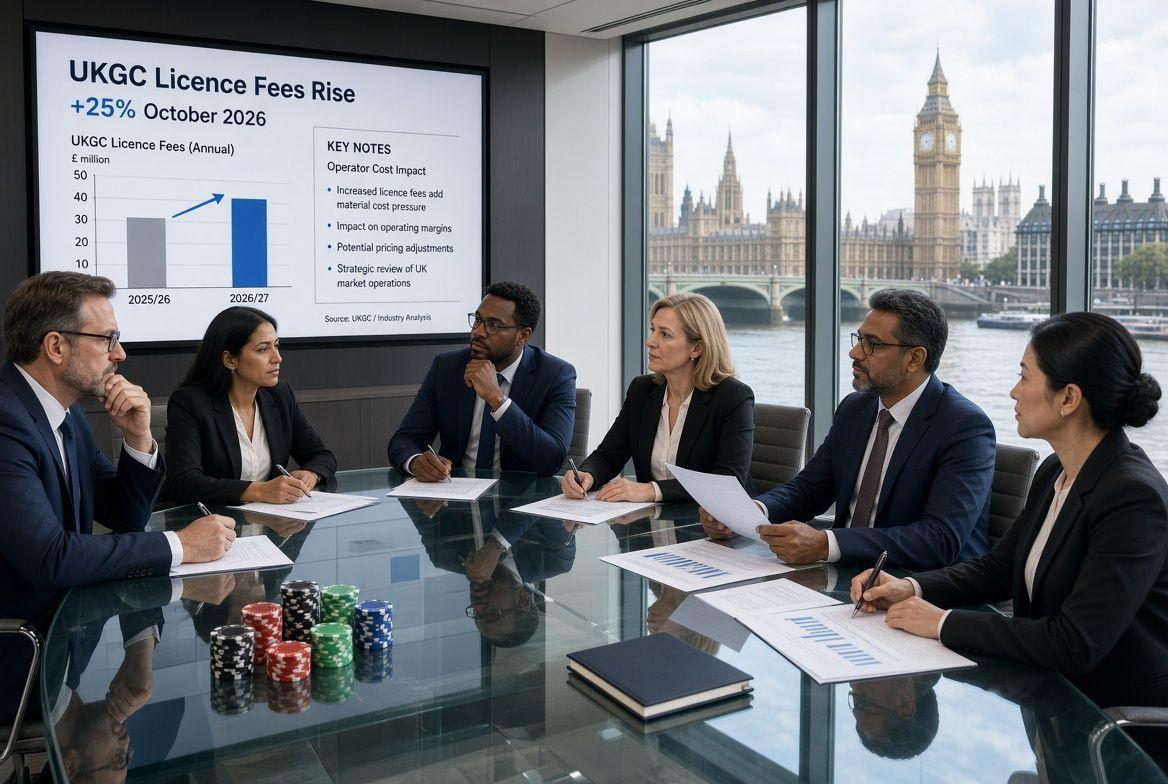
- How would a duty increase interact with the October 2026 rise in Gambling Commission licence fees?
Scenario analysis is more useful than relying on a single industry-wide forecast. Operators should separate machine contribution, site-level profit, unavoidable fixed costs and potential digital substitution.
For readers unfamiliar with the revenue terms used in these calculations, see GGR vs NGR: Formulas, Deductions and Worked Examples.
What happens next?
The next decisive event is the Autumn Budget on 28 October 2026.
Until the Chancellor delivers the Budget, the 40% figure remains a proposal under political discussion. A Budget announcement would still need to define the affected rates, products, commencement date and legislative mechanism.
The most consequential detail may not be the headline percentage but the scope. A narrowly targeted increase aimed at particular higher-stake machines would produce a different commercial outcome from a broad restructuring of MGD across multiple venue types.
iGamingIndustry view
The argument has become polarised between a large revenue estimate and a large closure estimate. Neither should be accepted without examining its assumptions.
A higher MGD rate would plainly reduce the contribution earned from affected machines if all other factors remained equal. But all other factors will not remain equal: operators may close sites, reduce investment, alter their product mix or redirect customers online. Those behavioural effects determine how much revenue the Treasury ultimately collects.
The government therefore faces a three-part test. Any change should be precisely targeted, supported by transparent modelling and evaluated across both retail and remote channels.
For the iGaming sector, this is not merely a high-street tax story. It is another step in the redistribution of gambling economics between products, channels and operators—and it could accelerate the strategic importance of scale in the British market.
This article reflects information available on 15 October 2026. It will be updated following the Autumn Budget.
Related
More coverage
UKGC Licence Fees Rise in October 2026: What Operators Need to Know
Most Gambling Commission licence fees changed on 1 October 2026. Here is what operators, suppliers and personal licence holders need to check.
15 Oct 2026

UK Gambling Affiliate Compliance: Advertising Rules and Operator Responsibilities
A sourced guide to gambling affiliate advertising, operator oversight, significant offer conditions, under-18 protection and current bonus rules.
4 Oct 2026